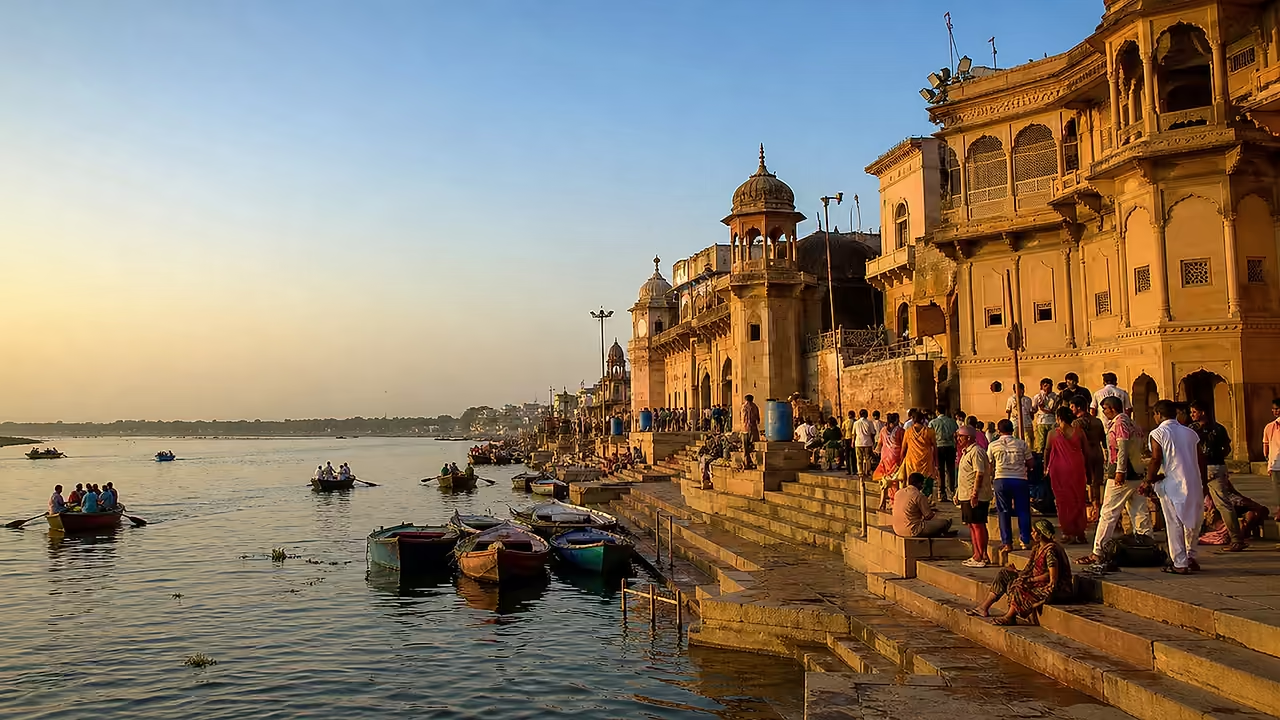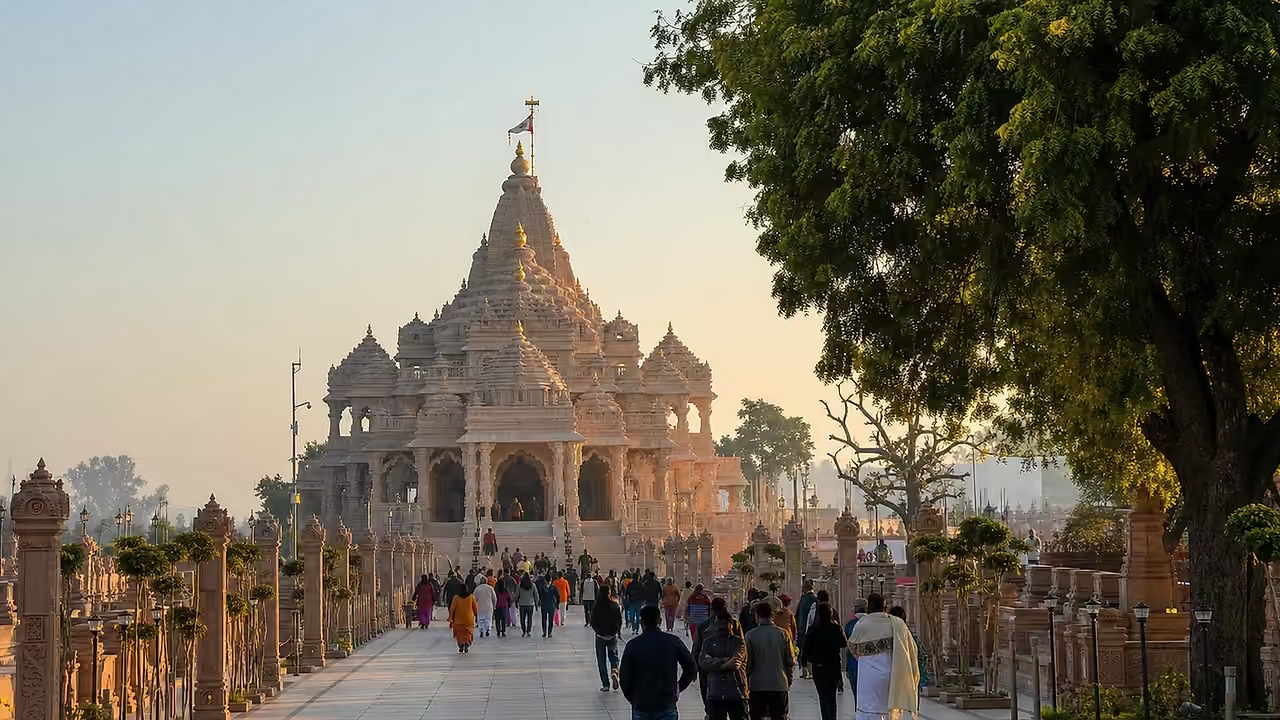
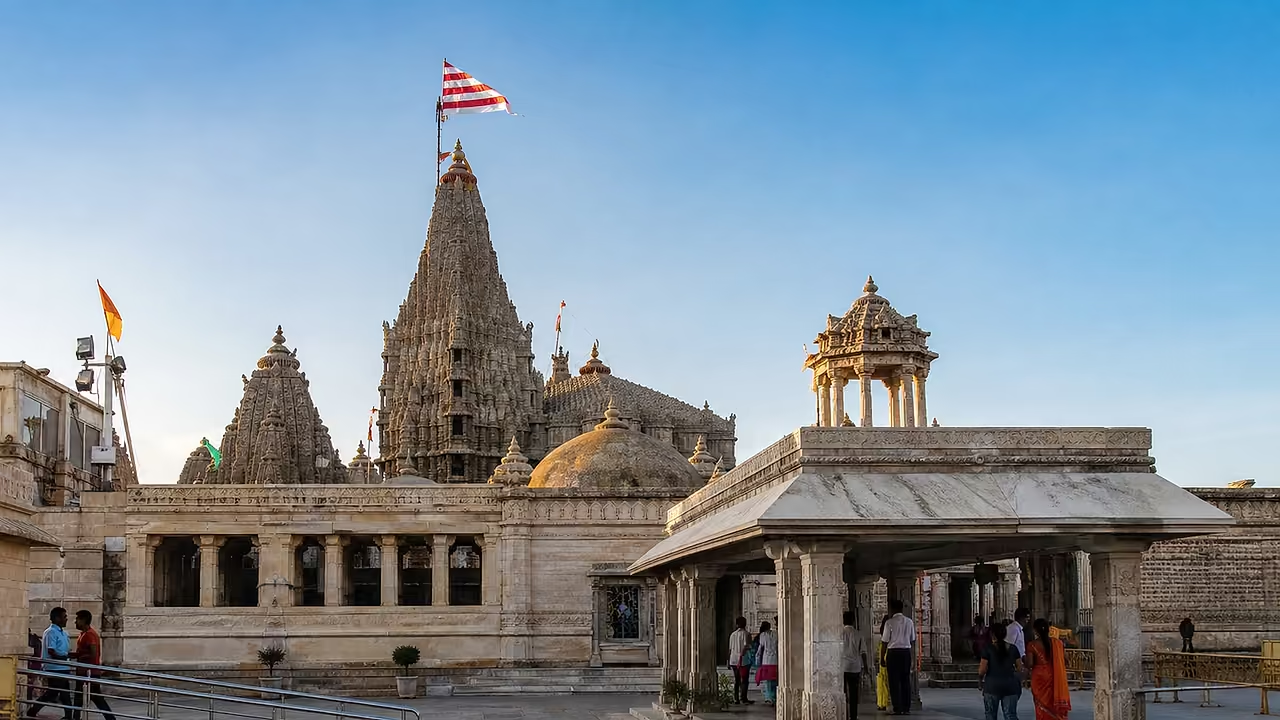
The Dwarkadhish Temple, popularly known as Jagat Mandir, is among the holiest Krishna temples and is located at the heart of the ancient seaport city of Dwarka in Gujarat. As the spiritual heart of Krishna worship, the temple's great importance draws pilgrims from across India.
Dwarkadhish Temple is a part of India's four major pilgrimage sites called the Char Dham temples. This temple stands for the divine kingdom of Lord Krishna, whose rulers were the gods. The temple's overall design and layout, such as its high soaring tower, beautiful carving and the perpetually observed ancient Hindu rites are a few among many exquisite facets of Indian spiritual and cultural heritage that have been preserved here. Along with the religious history and cultural symbols, this article also deals with festivals observed, temple rituals and travel details as well.
Origin of the Dwarkadhish temple

The Mythical Foundation of Dwarka
At the Srimhamsa, Skanda Purana, and Vishnu Purana epics, it is stated that Lord Krishna located Dwarka after coming out of Mathura. To escape the frequent hostile attacks of Jarasandha, Krishna decided to settle down in a prosperous and peaceful place and there he chose to reconstruct a splendid city of Dwarka on the western coast of India for himself.
Being the capital city of Krishna's kingdom, Dwarka became well-known in the country for its richness, blind submission to divine law, and luxurious lifestyle. The ancient scriptures say that Dwarka was like a city of gold with royal houses, temples, and big gathering places.
After Lord Krishna left the formless world, folklore has it that the Arabian Sea swallowed the original city of Dwarka up, leaving behind its sacred memories and spiritual significance only.
The Making of Dwarkaadhish Temple
It is believed that the temple was first constructed by Vajranabh, Lord Krishna's great-grandson, 2500 years ago. Lore states that Vajranabh constructed numerous Krishna temples based on scripts originating from Krishna's descendants.
Throughout history, the temple saw several repairs and changes occasioned by the vagaries of war, natural calamities, and accidental destruction. The present temple building is mostly of 15-16th CE but various parts reflect the ancient style.
Dwarkadhish temple is now regarded as one of the top Krishna temples worldwide.
Architecture of Dwarkadhish Temple
Dwarkadhish Temple is a wonderful example of the Chalukya temple style that excels in displaying stunning craftsmanship and structural ingenuity of India in old times.
The temple's gigantic tower and magnificent edifice make it stand out prominently in the cityscape, allowing people to see it from afar.
Five-Story Temple Structure
As the temple is a five-story building resting on 72 pillars exquisitely decorated, it is a purveyor of both tradition and precision.
The edifice represents a combination of stonework, symmetry, and geometry governing sacredness or divinity, which were the core of only the Indian temples then.
The Towering Shikhara
The temple's very prominent feature is a massive shikhara or a temple spire, which is about 78 meters (256 feet) high.
The lofty spire embodies the linkage of the terrestrial with the heavenly, thus, showing the way of spiritual rise to those who worship.
From afar the huge tower is clearly discernible, which makes it a landmark for visitors coming to Dwarka.
The Sacred Flag Tradition
The flag of Dwarkadhish Temple which is called Dhwaja, is among the most outstanding customs associated with the temple.
The temple flag spotlight:
- Its total length is about 52 yards
- Its five times daily replacement is guaranteed
- It is the symbol of Lord Krishna's presence and protection
For a spiritual purpose and as an act of dedication, devotees sometimes sponsor the flag-raising ceremony.
Intricate Stone Carvings
Scenes from the divine worlds, symbolic representations, and operating sacred patterns are etched) on the temple walls in an impressive manner. These pieces of art also testify to the skill of the ancient craftsmen who managed to depict their religious sentiments through this medium of stone carving.
The statues are showing:
- Episodes from the life of Krishna, the divine figure
- Deities of Hinduism and celestial beings
- Sacred geometrical motifs
- Flower and symbolic designs
With these fine details, Dwarkadhish Temple is both a place of worship and a piece of fine architecture.
Religious Importance of Dwarkadhish Temple
The Dwarkadhish Temple spiritually manifests Lord Vishnu and his incarnations, playing a primary role in Vaishnavism the spiritual practice revolving around Lord Vishnu.
The literal meaning of Dwarkadhish is "King of Dwarka, " referring to Krishna as the divine king of the ancient city.
Every year, millions of worshippers come to the temple to be blessed, attain spiritual tranquility, and feel a connection to the divine.
Dwarkadhish Temple in the Char Dham Yatra
According to Hindu shastras, Dwarkadhish Temple is one of the four sacred Char Dham pilgrimage sites.
The four Char Dham locations are:
| Direction | Sacred Temple |
|---|---|
| North | Badrinath |
| South | Rameswaram |
| East | Jagannath Puri |
| West | Dwarkadhish Temple |
Char Dham Yatra is a holy pilgrimage and the completion of this journey is regarded as a way to purify one's soul and attain moksha (spiritual liberation).
Krishna's Divine Kingdom
After abandoning Mathura, Lord Krishna, who is greatly worshipped in Dwarka Puri, the place where he was supposedly living the life of a king, thus making it the royal kingdom of Lord Krishna.
Lots of Krishn devotees see Dwarkadhish Temple as a kind of window through which one could sense the divine presence of Lord Krishna's kingdom, thus making such a pilgrimage highly emotionally and spiritually rewarding.
Daily Rituals at Dwarkadhish Temple
The temple has implemented a very tight schedule of traditional rituals and devotional ceremonies being conducted throughout the day.
The temple priests carry out these rituals, which have their roots in ancient customs, and they have been performing them faithfully for centuries.
Mangala Aarti
Mangala Aarti is the first ritual of the day and it is conducted at sunrise.
This ritual represents awakening the deity and inviting the divine presence into the temple. Devotees are seen assembling in the temple very early in the morning to collaborate in witnessing this sacred event.
Shringar Darshan
Lord Krishna's idol is embellished with during Shringar Darshan:
- Elegant Clothes
- Expensive Jewelry
- Beautiful Flowers
- Holy Ornaments
The god looks like he has a royal demeanor, which is in line with the image of Krishna as the King of Dwarka.
Rajbhog Offering
The offering of elaborate food items to the deity as part of the Rajbhog ritual takes place around noon.
This offering serves as a physical representation of one's thanking, worshiping, and honoring Lord Krishna.
Sandhya Aarti
When it is time for the evening Sandhya Aarti, the temple gets infused with the ringing of the bells, the chanting of the bhajans, and the playing of the musical instruments.
This particular piece of work is responsible for creating a spiritual ambiance at such ahigh level that it often results in the devotees being emotionally touched to a very great extent.
Major Festivals Celebrated at Dwarkadhish Temple
Several main festivities are held at the Dwarkadhish Temple that bring in thousands of worshipers of Lord Krishna to the location.
anmashtami Festival
Janmashtami, anniversary of the birth of Lord Krishna, is the main event of a temple's festival calendar.
As part of the festivities:
- Temples are illuminated with several strings of fairy lights and are made beautiful by decoration of flowers.
- Performances of bhajans and dances take place.
- Midnight celebrations see a congregation of thousands of devotees.
At the stroke of midnight, the birth of Krishna is marked by celebrations that are loaded with happiness and devotion.
Holi Festival
People welcome Holi with colored powders, devotional songs, and cheerful get-togethers; it is, after all, a festival through which one recognizes Krishna's mischievous traits.
The whole temple turns into a place of solemnity and happiness during this festival time.
Diwali and Annakut Festival
During the five days of Diwali, the temple stays decked out with lamps that are never put off.
During Annakut, people present heaps of diverse dishes to Lord Krishna as offerings, symbolizing gratitude and generosity.
Dwarka: The Ancient City of Krishna
On top of all its spiritual and historical importance, Dwarka can also be regarded as one of the oldest cities in India.
Krishna's city has been depicted in the scriptures as a great kingdom encircled by:
- Magnificent palaces
- Wide streets
- Strong gates
- Lovely temples
The recent marine archaeological findings off Gujarat coast unveiled tattered remains of submerged structures, which adds to the credibility of a notion about the ancient city that lay under the sea.
Dwarka, at present, is a prominent spiritual pilgrimage site among other ones in India.
Important Temples Near Dwarkadhish Temple
Most religious travelers to Dwarka make it a point to see the other temples that are closely linked to Lord Krishna's life and other Hindu myths.
Bet Dwarka
Bet Dwarka, a small island located not more than 30 km from the city of Dwarka, is the place where Lord Krishna was believed to have lived.
One attracts devotees who make a sea voyage by boat across the Arabian Sea to come to this holy island temple.
Rukmini Devi Temple
The Rukmini Devi Temple is the shrine of Krishna's consort, Rukmini.
The artistic style and sculptural work of the temple are splendid and it narrates the divine wedding of Krishna and Rukmini, which is a significant mythological event in the region.
Nageshwar Jyotirlinga
Nageshwar Temple is counted among the 12 Jyotirlingas, which means the shrines of Lord Shiva, and is located quite close to the city of Dwarka.
This temple is an important religious landmark for the pilgrims who undertake the worship route of Dwarka.
Best Time to Visit Dwarkadhish Temple
October to March is the best time to visit Dwarkadhish Temple as the weather in Gujarat during these months remains mild and comfortable for traveling and touring.
Seasonal Travel Guide
| Season | Experience |
|---|---|
| October – March | Pleasant weather and best pilgrimage period |
| April – June | Hot summer climate |
| July – September | Monsoon rains with scenic coastal views |
A trip to Dwarkadhish temple during Janmashtami will gift you a spiritually vibrant vibe that is only possible during this occasion.
How to Reach Dwarkadhish Temple
Thanks to the diverse network of major transport routes, Dwarka is accessible from almost all corners of India.
By Air
Jamnagar Airport is the nearest one at a distance of 130 km from Dwarka. It is possible to hire a taxi or take a bus from there to the temple city.
By Train
Besides Dwarka itself, trains running through Dwarka Railway Station also connect the city with the following major destinations:
- Ahmedabad
- Rajkot
- Surat
- Vadodara
By Road
Through well-maintained highways, Dwarka is connected with the rest of Gujarat. Normally, pilgrims prefer to come by bus or private vehicle.
Pilgrimage Experience at Dwarkadhish Temple
Visiting the Dwarkadhish Temple is not just a religious trip but a spiritual journey to the core.
Prayer and chanting permeate the temple along with:
- The ringing of temple bells
- Devotional songs
- The aroma of incense sticks
Many devotees, who have had the chance to visit, consider it their moment of harmony, faith, and divine touch with Lord Krishna.
Conclusion
Located in the city of Dwarka, the temple of Dwarkadhish is one of the most sacred places of Lord Krishna in India. Besides being steeped in rich mythology, ancient legend, and grand architecture, this temple has spiritual ceremonies and a powerful religious essence that one cannot miss anywhere else in India.
Every element of Dwarkadhish Temple, from the towering temple spire to the rituals of closing the doors at night, is a symbol of Krishna's divine kingdom.
For travelers, history buffs, and spiritual devotees alike, a trip to Dwarka will open the doors to one of the holiest and most historic temples in the entire world.